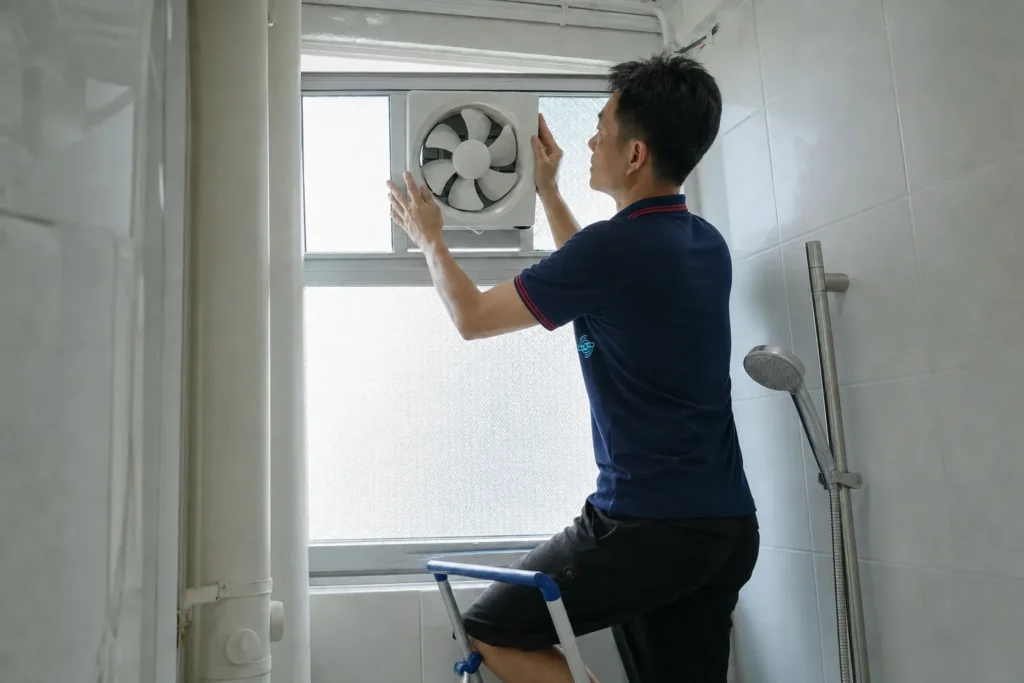
Exhaust fans rarely fail all at once. The motor usually gives warnings for weeks or months first: a new noise, weaker airflow, a fan that takes longer to start.
The short answer
If the fan is louder than it used to be but moves less air, the motor or its bearings are wearing out. Catching it early often means a simpler repair. Left too long, it can stop completely or overheat.
Tip from the workshop
A fan that hums but does not spin should be switched off. The motor is trying to turn and can overheat.
What the signs usually mean
| What you notice | Usually means |
|---|---|
| Grinding or squealing | Worn bearings |
| Rattling | Loose mounting or a blade touching the frame |
| Humming but not spinning | Motor or capacitor fault |
| Slow to start | Motor wearing out |
| Loud but little airflow | Worn motor, dirty blades or blocked duct |
| Burning smell | Overheating: switch off and get it checked |
Repair or replace?
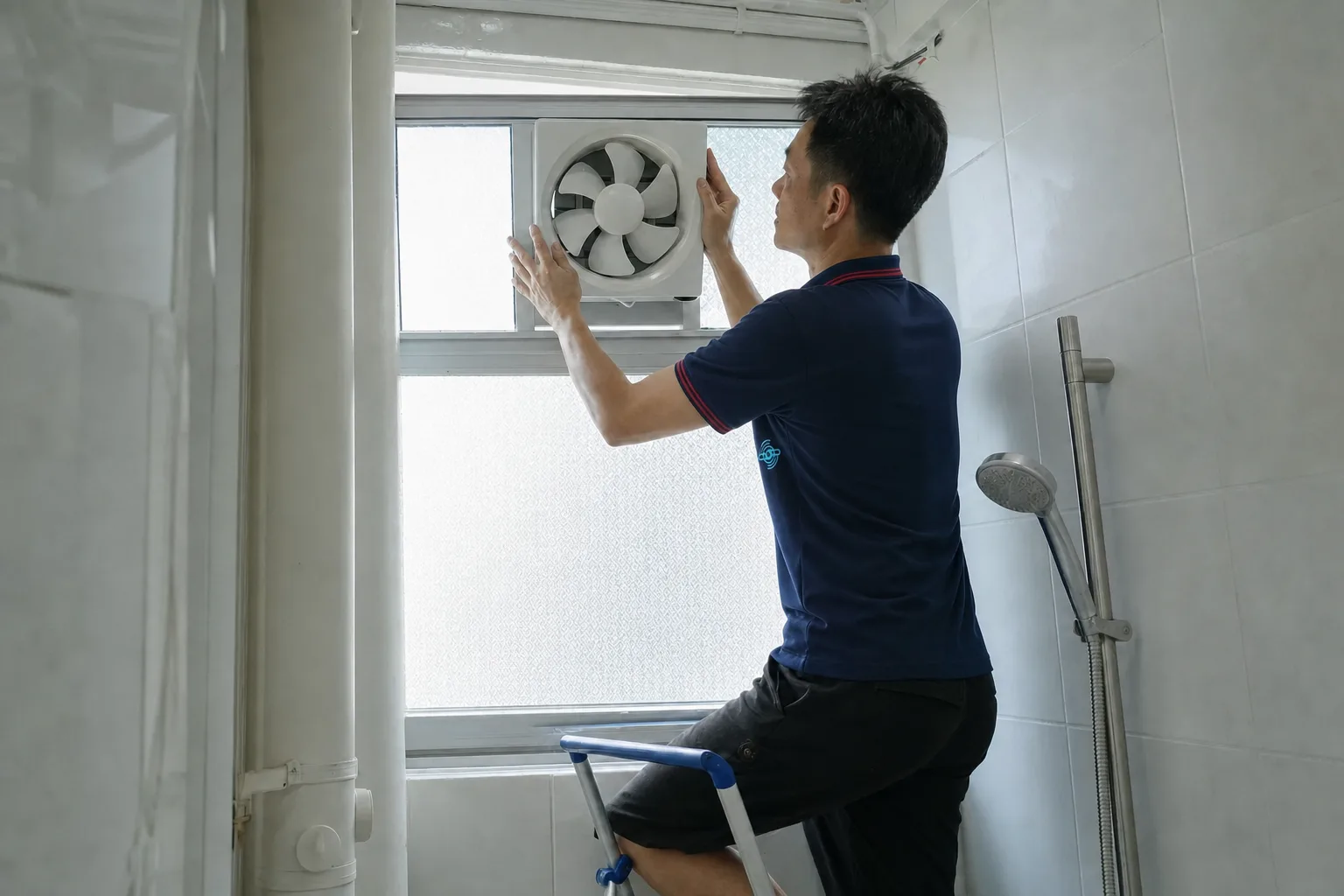
A loose mounting, dirty blades or a blocked duct are usually quick fixes. A worn motor in an older fan is often better replaced with a new fan of the right size, especially if the old one was never sized for the room. We tell you which makes sense before any work starts.
Signs it is time to call someone
- The noise is getting worse week by week
- You smell burning or see scorch marks
- The fan trips the power
- Cleaning the blades made no difference to airflow
Quick checks you can do yourself
Always switch off at the isolator or wall switch first.
- Clean the blades and grille. Dust and grease make a fan noisy and weak.
- Check the screws. Tighten any loose mounting screws you can reach safely.
- Spin it by hand. With the power off, the blades should turn freely and quietly.
- Do the tissue test. With the fan on, hold a tissue near it. If it barely moves, airflow is low.
Rather not do it yourself?
We’ll repair or replace it, at a fair price.
Send a short video of the fan running and a photo of the label if you can see it. We tell you whether it needs a repair or a new fan, and what it costs, before we start.
The easiest next step
Record 10 seconds of the fan running so we can hear it, and take a photo of where it is mounted. Send both on WhatsApp and we will tell you what we think is wrong.